

Andrew Gregg, the co-founder and CEO of Sedna Robotics, shows oceanographic data collected from the Warden, an autonomous monitoring vessel.
Visitors to the Chatham Fish Pier on a cold blustery day last month may have seen red and green missile-shaped objects as well as a yellow, kayak-sized platform in the water.
“Jaia Bots” as well as a “Warden” spent the afternoon at the pier for the first in a series of “Robots for Fishermen” live demos.
Both types of environmental sensors are part of a growing effort to equip commercial fishermen with tools to better adapt to a rapidly changing ocean. “Robots for Fishermen” is part of NSF Seafood Engine in New England, which brings innovative technology to New England’s working waterfronts and aims to strengthen the industry from bait to plate.
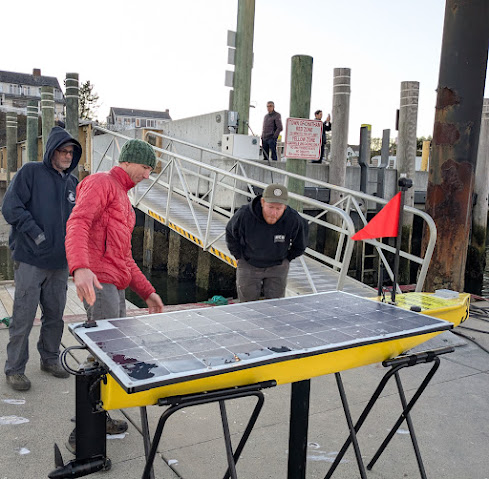
Fishermen Beau Gribbin, left, and Sean Connors, right, check out the Warden with Andrew Gregg.

Christian Moffitt of Jaia Robotics shows the team from Coonamessett Farm Foundation a Jaia Bot, an autonomous aquatic data collection system.

The Warden and Jaia Bots are ready for their demonstration at the Chatham Fish Pier.
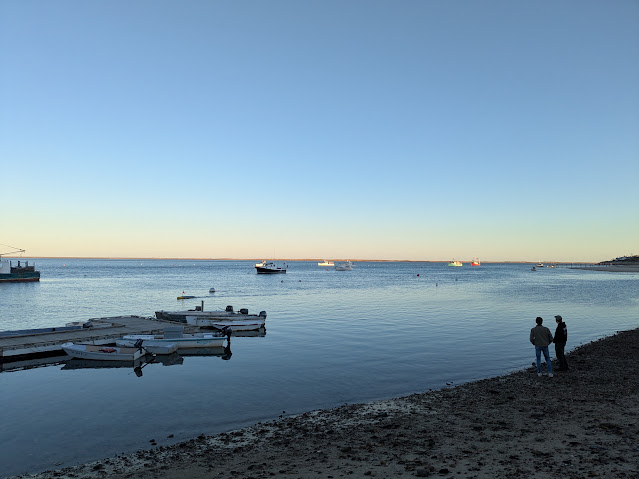
Fishermen watch the Warden, which is already been used by the state Division of Marine Fisheries to monitor low oxygen areas in Cape Cod Bay.
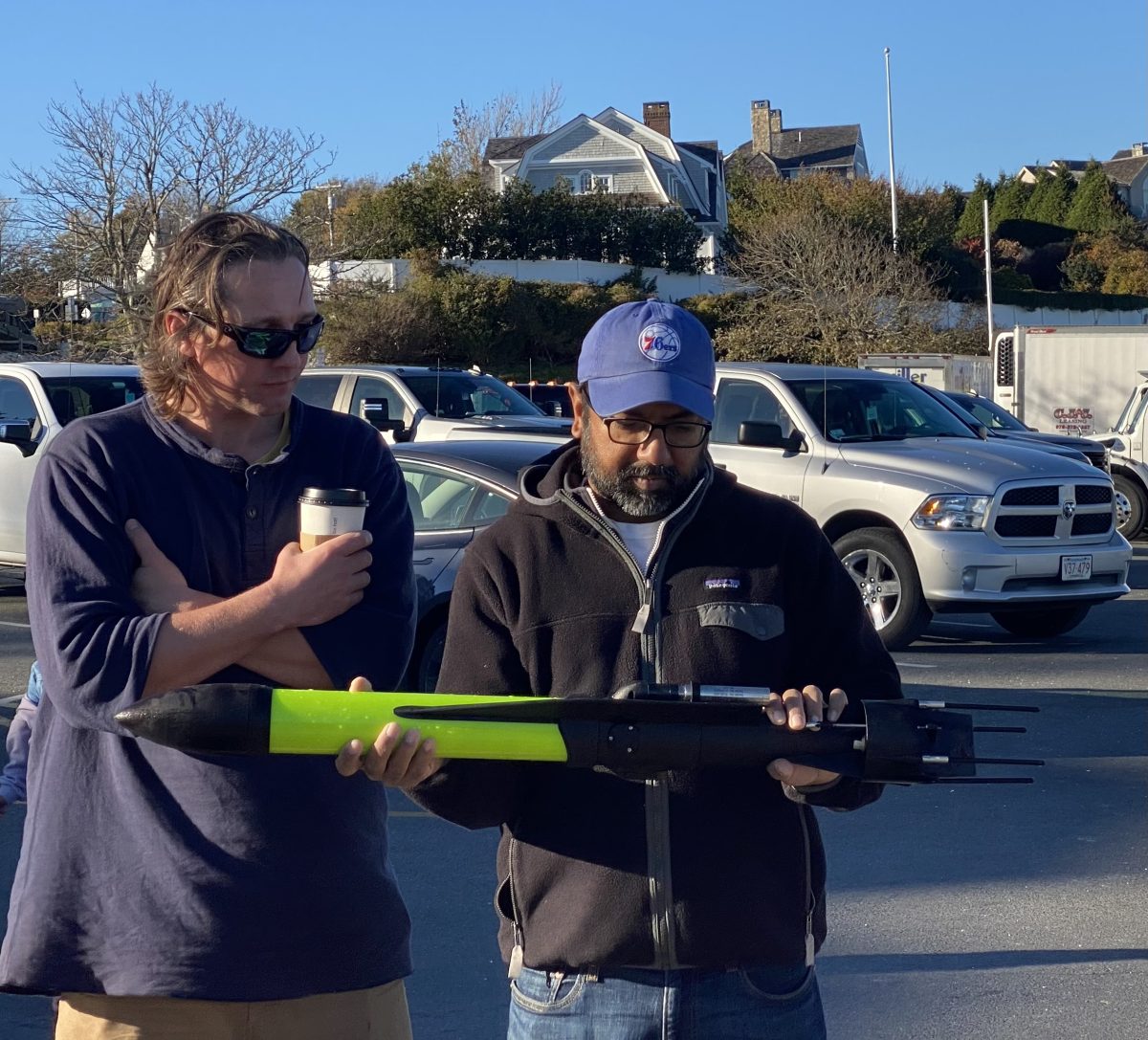
Ryan Munnelly (left) and Samir Patel take a close look at the Jaia Bot.
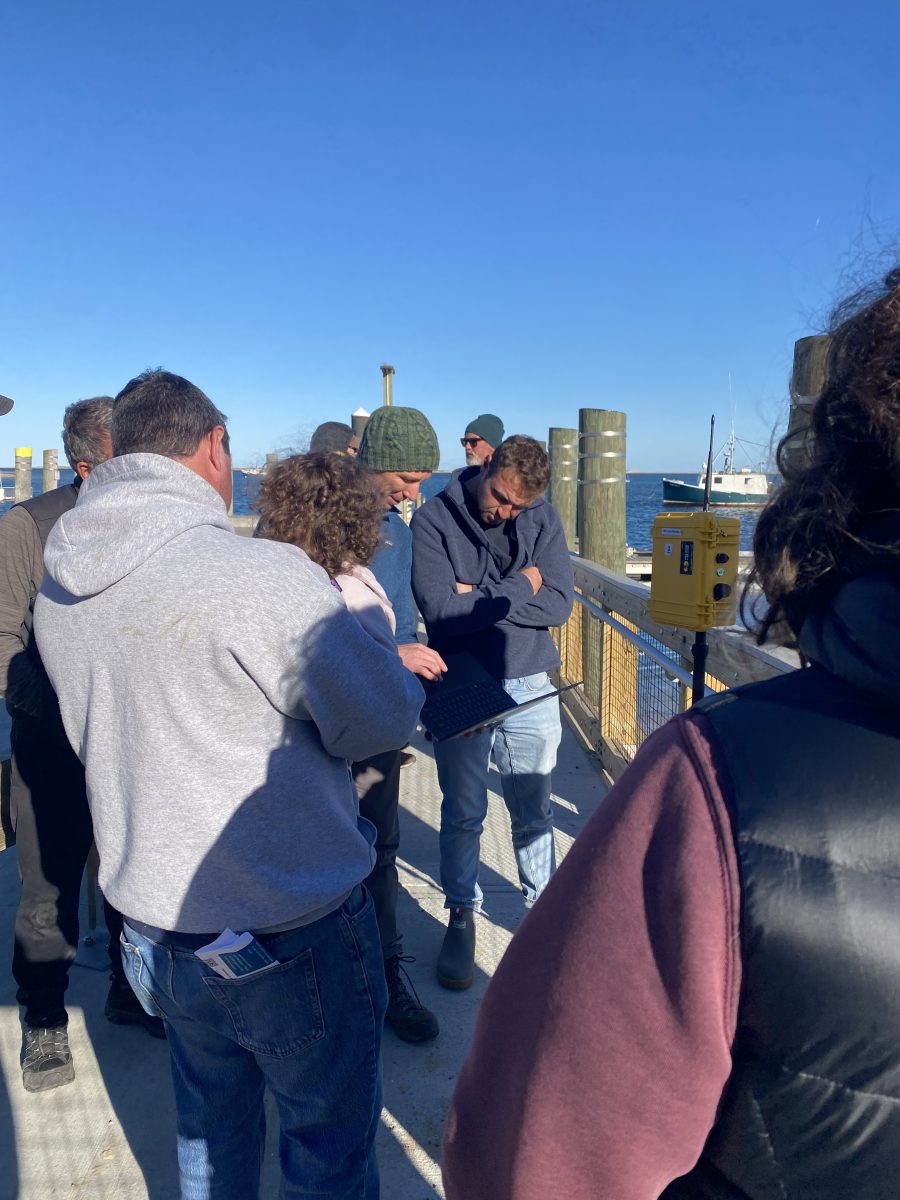
Lobstermen, draggers, gillnetters and scallopers can all benefit from oceanographic data collected by environmental sensors – which they can see in real time with this new technology.

Andrew Gregg, center, said “Fishermen know these waters better than anyone, and their questions about what’s happening below the surface are exactly what we want to answer.”

Jaia Bots are fast and can be launched from a fishing vessel to scout water conditions. The Warden can stay in an area for weeks transmitting data via Starlink and return to port on its own.