
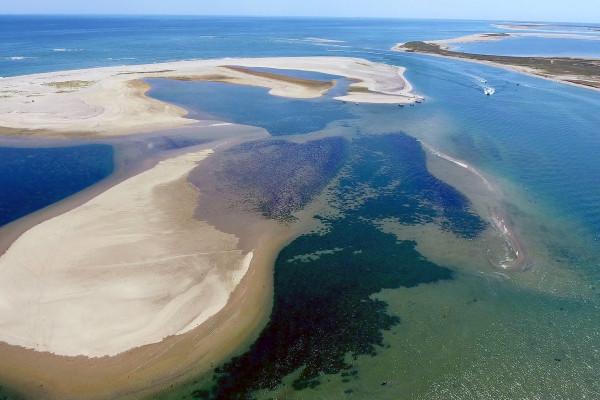
Christopher Seufert photo
By John Pappalardo
By unanimous vote, the Fishermen’s Alliance board directed me to join a committed group of Cape Codders and file legal notice that we oppose dumping radioactive wastewater into Cape Cod Bay.
The Association to Preserve Cape Cod is spearheading the action. It comes after the Commonwealth of Massachusetts denied Holtec, the company now responsible for cleanup and decommissioning the Pilgrim nuclear power plant in Plymouth, a permit to do the dumping. Holtec has appealed. We’re adding our voice to those who say the Commonwealth is right.
There’s an Alice in Wonderland, through the looking glass element to this. After all, who in their right mind would think that releasing radioactive water into Cape Cod Bay would be a good idea?
Holtec, for one.
Their argument, at least in public, is that the amount of radioactive material in these millions of gallons they want to dump is so miniscule as to be irrelevant. They have produced some scientific opinion to back that up.
Of course that opinion is far from consensus, opposed by other credible sources who say we can’t be 100 percent sure that’s true, so why take a risk?
We are joining in not just because of that uncertainty, although that would be enough.
We understand the potential harm of dumping that water is not just environmental, it’s also economic, and psychological. We know that smart, skeptical people not prone to crazy notions could well balk at the idea of eating lobsters, other shellfish and finfish caught in Cape Cod Bay, if that bay is the receptable for low-level radioactive water from a nuclear power plant. That economic, psychological impact would be directly aimed at the fishing community.
We also understand that since the day that power plant went online in 1972, every bill ever charged to any consumer has included a little something to set aside for the end game, decommissioning. That fund is now hundreds of millions of dollars. It is guaranteed to the company, one key reason why Holtec took on this project because it removes almost all financial risk.
This is the company’s money now, but in truth it is the public’s money. And here’s the kicker: Whatever Holtec doesn’t spend, it gets to keep, so there is direct incentive to keep costs down as much as possible.
Dumping that water into Cape Cod Bay is their cheapest option.
Actually there is one cheaper way to go, which is slow evaporation, venting it into the air. Sure enough, Holtec quietly set about doing that to reduce its liquid volume. As you might imagine, when people found out about that around Plymouth they weren’t too happy.
Then there’s removal, getting it out of town and away from the bay.
Holtec would like to emphasize that dumping in the bay avoids potential dangers of loading and trucking water to some site that might be underground or otherwise secure. But they have a problem making that argument while at the same time saying the stuff is perfectly safe.
Something of a contradiction, you might say.
Holtec has taken on the responsibility for cleaning up this nuclear power plant. They have the money – our money – to do so. Clearly they think this is profitable because this is not the only nuclear decommissioning site Holtec now controls. Maybe they’re concerned that if they can’t use Cape Cod Bay to dump, a precedent will be set that will impact them elsewhere.
If that’s true, maybe that would be good.
APCC asked us to weigh in because we have strong standing and credibility, given our long work representing the fleet, some of whom work the bay. The board concluded that for the sake of the fishing community, and the community at large, we should.
There will be affidavits to sign, legal tactics to consider, partners to align.
We’re there.
John Pappalardo is CEO of The Cape Cod Commercial Fishermen’s Alliance