
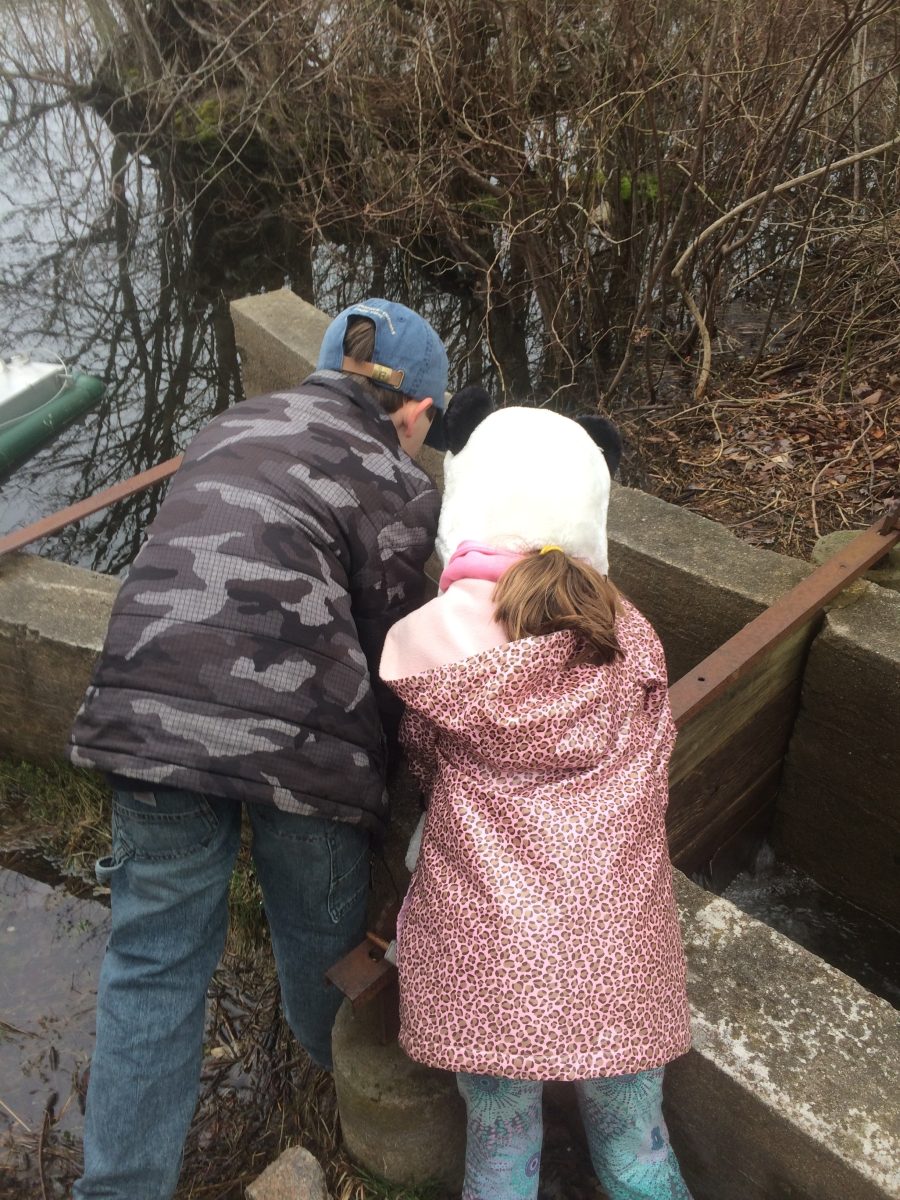
Supporters are hoping the herring harvest will be an opportunity for education and people are encouraged to take their children.
By Doreen Leggett
When Stephanie Ridenour was commercial fishing and vessels were coming in for the day, no one wanted to be the first to navigate the changeable, risky Chatham Bar.
Ridenour, now natural resources director for Harwich, found herself in a similar situation as she navigated the town’s first planned harvest of river herring in more than 20 years — while a ban remains across the Commonwealth.
“Congratulations on being the first in the state,” said Ryan Burch, Brewster’s senior shellfish and natural resource officer, who referenced the tremendous amount of work Ridenour put in.
Ridenour, joined by Mike Palmer, who oversees the herring monitoring program for Association to Preserve Cape Cod, and Aubrey Church, policy director for Fishermen’s Alliance, were part of a panel earlier this month. The conversation, moderated by WCAI’s Mindy Todd, entitled “River Herring Restoration: Is Cape Cod Ready for Limited Harvests?” was part of the Fishermen’s Alliance “Small Boats. Big Science.” program funded by Massachusetts Environmental Trust.
Due to declining numbers, the Massachusetts Division of Marine Fisheries put a moratorium on river herring harvest in 2005. Two species of river herring, alewives and bluebacks, are managed as one.
“I’ve held thousands of them in my hand, and I still can’t tell the difference,” Palmer said.
To help get a sense of herring numbers on Cape Cod – there are 18 herring runs – APCC started a volunteer monitoring program in 2007.
“We collect, manage, and share annual Cape Cod run stats, which (towns) can use for prioritization of needs,” Palmer said.
River herring face an enormous number of obstacles in their migration from the sea up the rivers to lay eggs in the ponds where they were born.
“They’ll keep coming back, unlike salmon that spawn and die,” Palmer said adding that they live 10 to 15 years.
Throughout their lifecycle they battle dams, habitat degradation, drought, culverts, blockages in rivers, silting, decline in water quality, climate change, hungry birds, and overfishing at sea.
Ridenour told the audience she recently spent time clearing leaves, branches and other debris from rivers to aid the herring’s journey.
“Leaves are the bane of my existence; they can actually create a serious impediment to fish passage,” she said.
The Fishermen’s Alliance, with help from commercial fishermen and the community, has worked to address overfishing at sea, when herring trawlers scoop up river herring in their quest for sea herring, prized as bait.
Several years ago, a federal regulation was approved that created a 12-mile buffer along the coast, extending 20 miles off the backshore of the Cape, to protect river herring and sea herring.
Shortly after the protections were approved they were overturned by a federal judge. Church said the New England Fishery Management Council, spurred on by public comments from the Cape, is working to put other protections in place.
“When forage is abundant our fisheries thrive,” Church said.
River herring have begun their migration and Palmer said APCC is in “desperate” need of volunteers to count them as they make their way home.
He explained that all herring runs on the Cape are not the same. Most had a jump in numbers in 2014 and 2019, which dropped again, while some, such as the Brewster run, have had a “marginally significant” increase.
Harwich, whose herring travel seven miles upstream to get to their headwater pond, has one of the strongest runs in the state, Ridenour said.
That success was one of the reasons Brad Chase, a Harwich resident and diadromous fisheries leader from DMF, started the effort to open a small harvest several years ago.
“Harwich is fortunate,” said Ridenour. “We average over half a million fish.”
Even though the town can harvest about 10 percent of its herring and remain a healthy run, they are being conservative and recommending a harvest of less than 3 percent. Only 150 permits will be given out, mostly to residents and with strict protocols in place, including no commercial harvest.
“We are just getting our feet wet,” she said.
The select board officially approved the harvest on Monday and it will take place at Johnson’s Flume in the West Reservoir. The harvest, which will be strictly monitored, will be allowed for three hours on specified days. Permits will be on sale Saturday, April 4.
There will be celebrations, cultural events and opportunities to learn about herring and its history in Harwich.
Doug Erickson, herring warden in Brewster and on the alewife committee, was at Small Boats. Big Science. and harvested herring 50 years ago. He hopes the harvest and educational opportunities in Harwich will foster a greater connection between up-and-coming generations and the natural world.
“It’s important,” he said.
Small Boats. Big Science. is made possible by a grant from the Massachusetts Environmental Trust. You can contribute to MET’s environmental initiatives by choosing one of their four license plates when you purchase or lease a new car, or renew your registration. www.mass.gov/eea/MET.
Watch the video here.