Acadian Redfish, which ranges from Virginia to Iceland, also has a wide-ranging history, including being co-opted by the United States Army during World War II. But it was first identified in Provincetown.
The bright-colored fish was discovered in the harbor at the tip of the Cape by Captain Nathan Ellis Atwood in 1854. Atwood was friends with Dr. D. H. Storer, a physician and naturalist who identified numerous fish species and described others, including yellowtail flounder.
Charting the Past
Remembering Harry Hunt
“I’m going to Panama. Maybe I’ll do what the old man did back in the day. Land is plentiful and cheap, just like it used to be In Orleans when he bought all this. No regrets”
Those were the last words Harry Hunt Jr. said to me from his driveway two years ago. I have no doubt he did what he intended.
Harry Junior was the only son of Harry Hunt Senior, a man of unusual nautical and other talents.
Striped Bass – A history
By Duncan Oliver
With striped bass being fairly plentiful in New England waters today, it’s hard to imagine that this hasn’t always been the case. Stripers have been mentioned since the earliest settlers. Called rockfish further to the south, they were sometimes known as linesiders to fishermen around here. Youngsters are known as schoolies.
Prior to the arrival of the Pilgrims, several explorers mentioned stripers, along with cod. Captain John Smith found them so plentiful in 1614 that he wrote, “I myself at the turning of the type have seen such multitudes pass out of a pounce [fish trap] that it seemed to me that one might go over their backs drishod [dry shod].”
The first mention of stripers at Plymouth Colony occurred in 1621.
The Three Harbors of Harwich
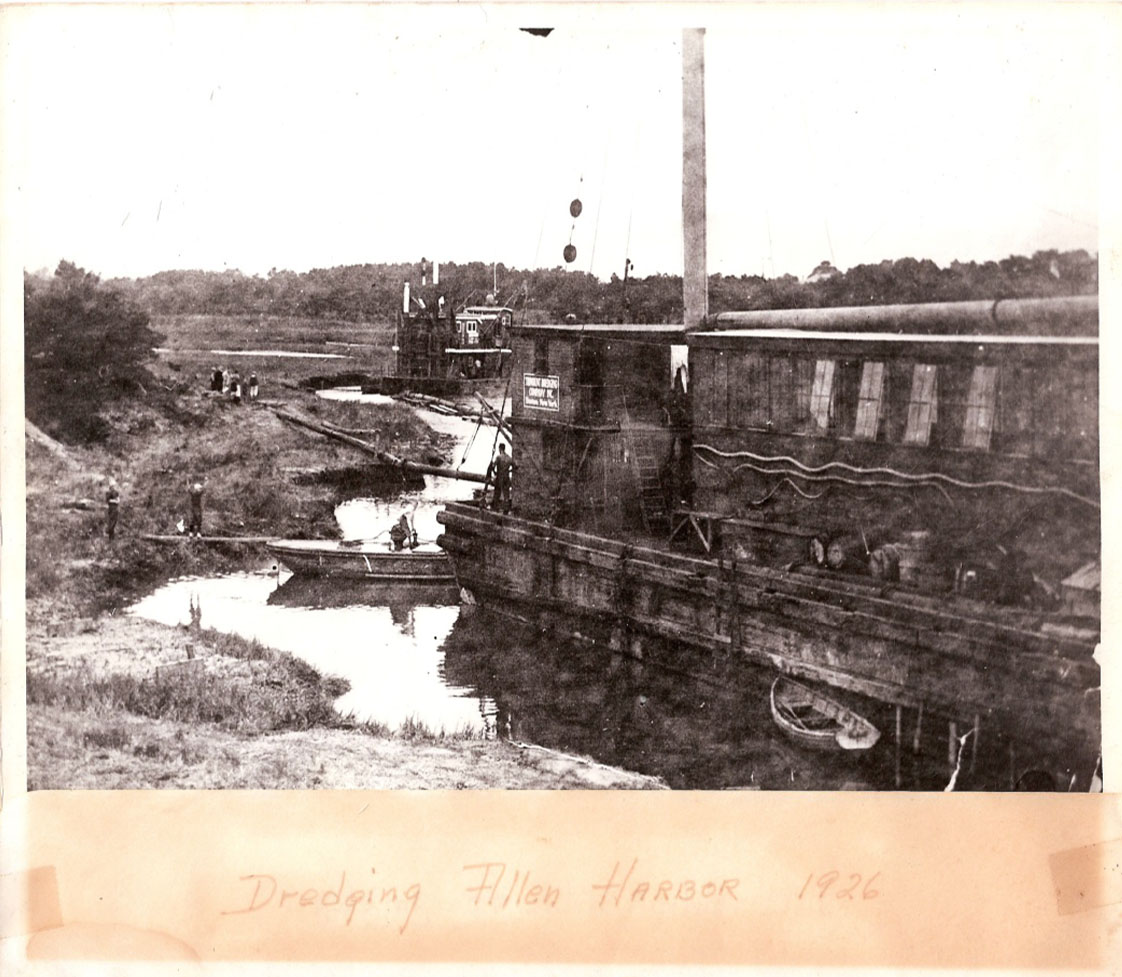
From a dusty racing track around a pond, a mill by a small river, and a marshy natural inlet, over the course of a century the town of Harwich crafted three important harbors opening to Nantucket Sound’s rich fishing grounds.
Allen, Wychmere and Saquatucket Harbors are strung along several miles of coastline in Harwich Port, and none of them originally offered full access to the Sound.
“Allen was a trickle, Wychmere was a salt pond with limited inflow and outflow, and Saquatucket was really just the Andrews River meandering from cranberry bogs down to a marsh,” says Tom Leach, who was Harwich’s harbormaster from 1973 to 2012.
Opening ‘the Hook’ archives
The first printed “Hooked on Cod” newsletter published in November 1997, about six years after “the Hook” was started by Fred Bennett, Mark Leach, Bob and Tom Luce and many others.
All the newsletters opened with a letter from the director, the inaugural penned by Lori LeFevre, a former fisheries researcher who led the organization. She announced she was taking a job as a fisheries analyst with New England Fishery Management Council and Paul Parker, who would then lead the organization for more than a decade, would be the new director.
Celebrating the Draggers of Provincetown
Before draggers, schooners dotted our harbor. Double-ended dories were used to row captain and crew from moorings to wharfs. Schooners operated by sail only.
Then came the 1940s, 50s, 60s and 70s, the decades of draggers, also called Side Trawlers or Eastern Trawlers. Alarms would go off at 3 to 4 a.m. every morning, all over town. Later, when telephones came into play, captains phoned the telephone operator. She plugged in, by memory, a call to each crew’s home number.
Jousting at Lightships
Don Quixote, idealist and dreamer, jousted at windmills.
Bill Golden jousts at Lightships.
Olin Kelly’s last laugh
Around 1970 I was catching, buying and selling lots of mussels. I had an Interstate Permit to buy and ship shellfish. The market was primarily in NYC. I lived in Chatham. Trucks with Chatham fish departed for NYC every night but Friday and Saturday. I would ship my bags of mussels on the fish trucks to my NYC customers.
Stuart Smith looks back at a fishing village, forward at a sustainable community
For much of Chatham’s history, everyone in town worked for the fishing industry either directly or indirectly.
“Chatham was entirely a fishing town,” Stuart Smith said. “It revolved around fishing.”
Smith, recently retired as harbormaster after 39 years working for the town, was no different.
One of his first jobs out of school, in 1983, was for David Carnes and Dick Larsen at Chatham Fish and Lobster, which opened in 1981.
“We did everything,” said Smith with a smile. “I smelled like a fish for years.”
Categories
e-Magazine PDF’s