Commercial quahog dragging is not for the faint of heart; a 1,000-pound metal cage filled with big mollusks swings towards you. Still, it’s better than doing it with bombs falling.
Charlie Miller, who spent summers half a mile from Rock Harbor when he was a kid, remembers fishing with Chet Higgins, captain of F/V Old Glory. Higgins, who lived in Orleans, would pick Miller up at 5 a.m. in his Corvair and drive to Wellfleet where he had his boat.
Sometimes they’d be dragging by the SS Longstreet, a target ship for the military, and as warning pilots would circle three times so boats could move out of the area before they started.
Charting the Past
A Harwich sea captain’s seared palm inspired the nation
Jonathan W. Walker was one of many Cape Cod men whose early times were all about the sea, born in 1799, Harwich captain of a fishing vessel. But then his life took a turn that led to infamy:
He became “the man with the branded hand,” an anti-slavery crusader whose handshake bore proof of his actions and beliefs. Branded by a United States marshal after caught at sea trying to smuggle slaves, the scalded letters “S S” were meant to stand for “Slave Stealer.”
The ocean’s price
I have written stories of the risks encountered while at sea. But the ocean surrounding our Cape shores also provides many a life-long living. The bounty we take from our waters sustains and enriches us. The sea has, for millennia, given of its stores for the betterment of man and continues to do so. However, it does so at a cost. It’s important to remain aware not only of the wealth the sea provides but of the tasks it demands of us as well. When at sea in small boats remaining aware of the surrounding waters is not only necessary but critical. An experience we once had serves as an example of this contrast.
Weir time warp
Weir fishing almost disappeared on Cape Cod. For those who may not understand how surreal that is we compiled excerpts from a random sample of newspaper articles and other accounts about the historic practice. The items show how important the industry was, with ups and downs. Although these historical gems are focused on the Outer Cape, trap fishing was a bustling industry across the peninsula.
The Cape’s 1970s lobster wars
An e-blast earlier this month from National Oceanic and Atmospheric Administration warned about growing conflicts between lobstermen and draggers. The message came with a warning: It is unlawful to negligently and without authorization remove, damage, or tamper with fishing gear owned by another person.
In the early 1970s there was no such law, and when hundreds of lobster traps off Chatham were being destroyed by fishermen dragging for flounders, some lobstermen took matters into their own hands.
This is the story of a series of battles in “The Lobster Wars,” reported and produced by Angela McNerney of Lower Cape TV, told mostly through Captain John Our and edited for clarity and length.
Running in Reverse
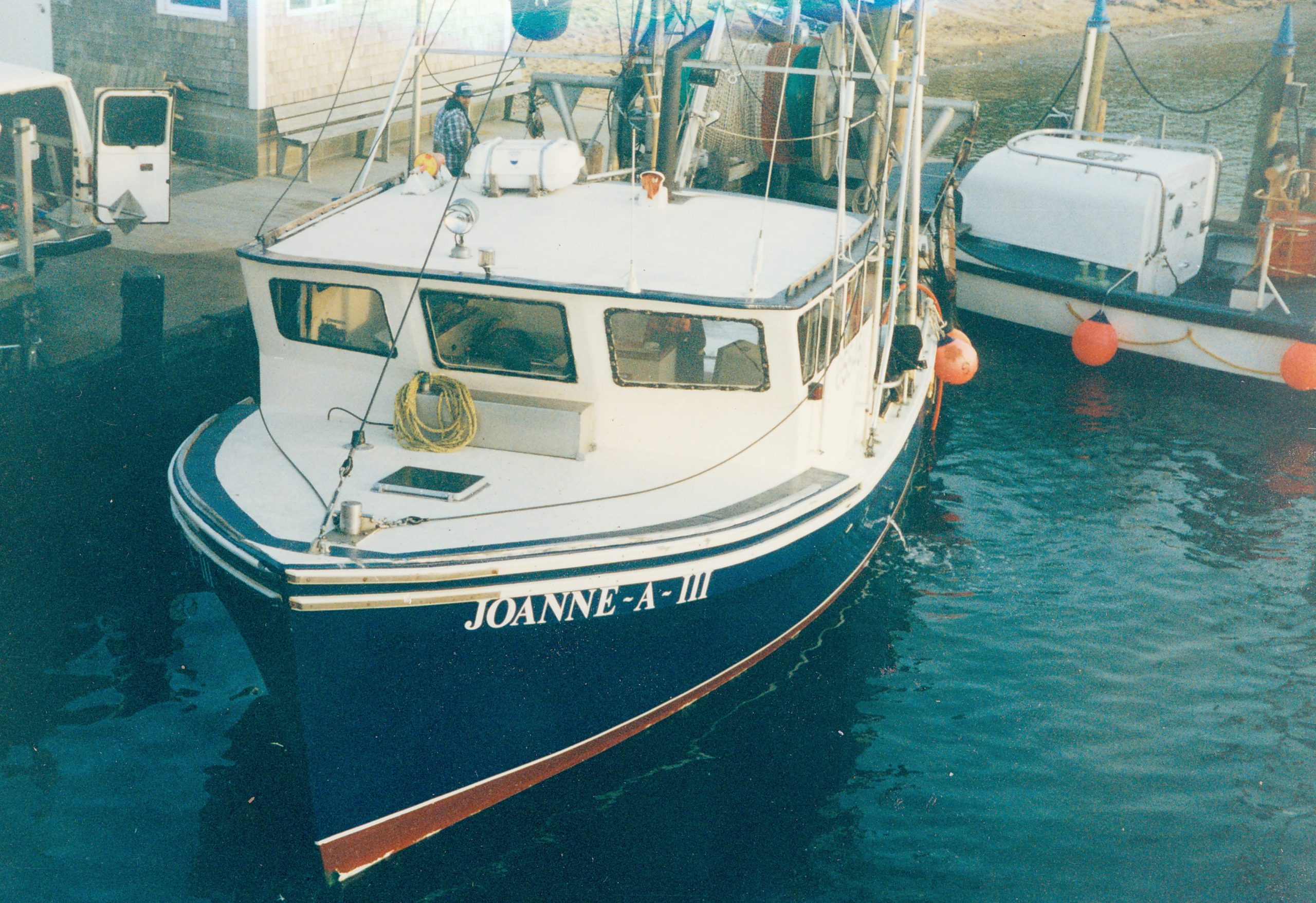
It was spring, 1974. Joanne and I had made the decision to try commercial fishing for our livelihood. This meant I had to lay down my clarinet and swap my tuxedo and bow tie for oil gear and fishing boots. It was unquestionably the biggest decision I had made since getting married. That had turned out well (and continues to after fifty- plus years) so we secured a loan and became the new owners of a used, wooden Maine-built 30 – foot fishing boat.
It was a cute little traditional “down-easter”. Not too wide but the cedar-over-oak ex-Chatham Fisherman had nice lines, was white with mast-buff trim. It was powered by a gas truck engine of 150 horsepower, hooked up to a Borg-Warner reduction gear. She could do about 12 knots and seemed to me the best of choices for a cod “longliner” — I was over the moon. The dream was a dream no longer.
Clam survey dredges up Ice Age find
Scientists participating in a recent Surfclam and Ocean Quahog Survey aboard the F/V ESS Pursuit made an amazing once-in-a-lifetime discovery! It happened during their second dredge haul. As usual, scientists brought the dredge sample aboard the vessel, deposited it onto a series of whirling conveyor belts, and delivered it to the processing area for data collection. While the sample had barely any clams in it, the team noticed it had one quite odd-looking… thing.
They could tell it was a bone of some sort—probably a jawbone by the looks of it. But, from what? It was kind of big. Too big to be a seal jaw, but too small and the wrong shape to be a whale. And it had teeth.
Chowder helps a community combat COVID
Words play across the screen and twist away, reminiscent of a Star Wars movie, ominous but in this case real.
“February 2020 Covid strikes. Suddenly the world is a different place.”
As the documentary continues, voices talk about chaos and fear that ensued at the start of the pandemic; markets for seafood shut down overnight, confusion over what the virus was, no one knew what would happen next.
Then a bright spot: Small Boats, Big Taste.
Out of sight, out of mind: The Foul Area
Back in 1990 I started hearing scary things about what might be lurking on the sea floor between here and Gloucester, due east of Boston.
For anything ocean-related, my first stop always was to Louie Rivers, Provincetown’s great fishing captain.
“Louie, you ever heard of a fisherman from Gloucester named Salvatore LoGrasso?” I asked. “Everyone calls him Sammy.”
Categories
e-Magazine PDF’s