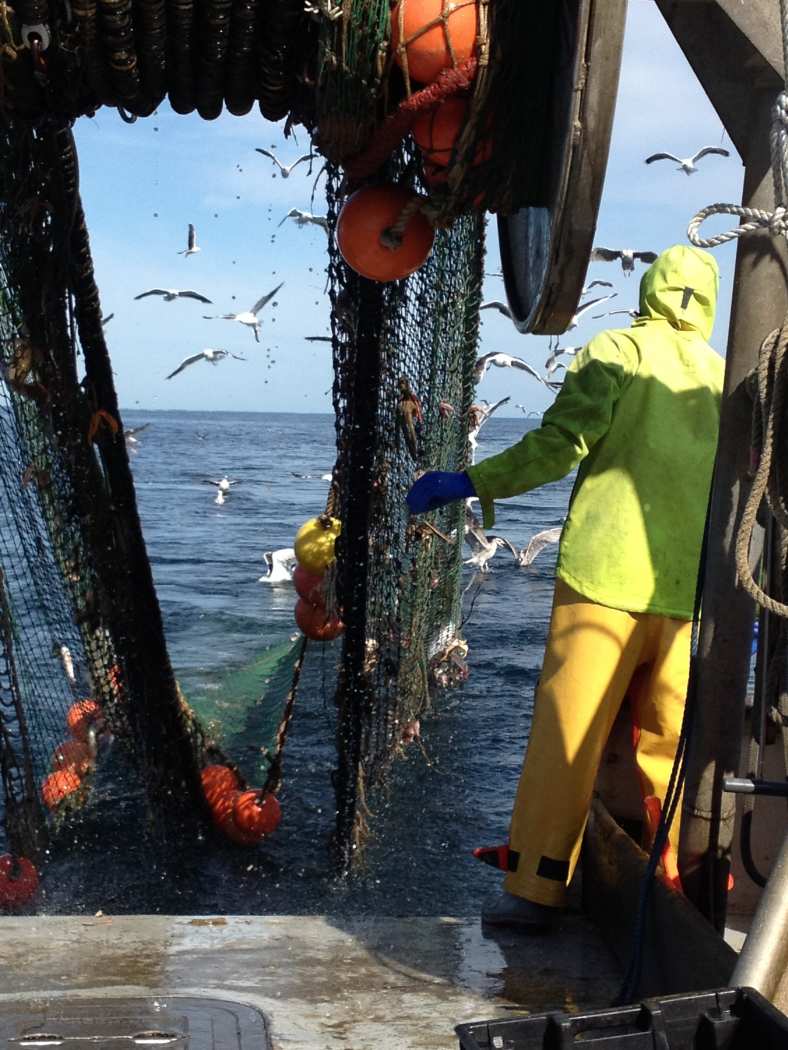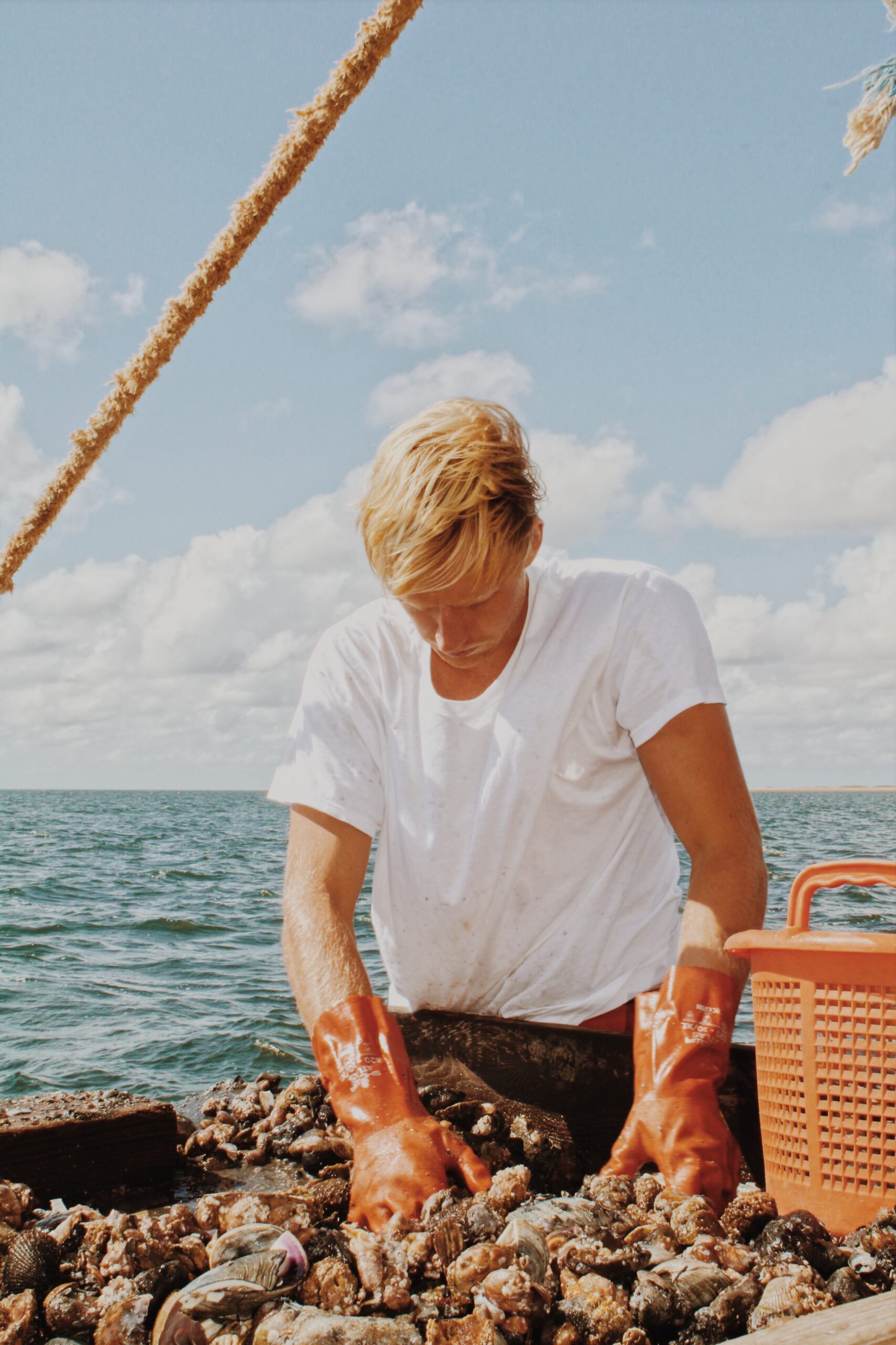
Over the course of months, multiple focus groups and close to 40 conversations, myriad reasons why people aren’t eating more seafood were revealed.
“I don’t want the smell in my house, and I don’t always know how to cook it.”
“I don’t feel comfortable buying fish at Stop & Shop and other chains.”
Aids to Navigation
Tom Smith’s Bluefish Bet
Hatch’s Fish Market in Wellfleet has a basement smoker with a pipe through the roof, and on certain summer days the cloying scent of sunscreen in town is replaced with a savory, maple-wood, campfire smell.
“The smoke goes all through the town,” said Tom Smith, Captain of F/V Sea Wolf.
The smell of bluefish on the smoker is so good that people are drawn to the Main Street fish and produce market, a stone’s throw from town hall.
“I call him the Pied Piper,” Smith said of Adrien Kmiec, who owns the popular spot.
Meet the Fleet’s flounder foray
Meet the Fleets are all about demystifying the lives of commercial fishermen and the catch they bring to shore. There is lot of confusion out there.
Aubrey Church, policy director at the Fishermen’s Alliance, offered an example. Years ago, her mother saw lemon sole in the grocery store and wondered if it was lemon-flavored flounder.
“It’s a running joke in my family,” Church said with a laugh.
Meet Ray Rowell: Our new permit bank director
Most mornings on the way to work in Chatham, Ray Rowell will take the long way out of Wellfleet along Ocean View Drive, past White Crest Beach, to look out at the Atlantic and check who’s fishing.
“I can see if there are any clam boats out there,” Rowell said. “It’s my way of keeping tabs on things. I also compulsively check the weather.”
Rowell used to be on clam boats until the Bentley College graduate took a job as a sales agent with a life insurance company. Then he saw an advertisement for Fisheries Permit Bank Director at the Fishermen’s Alliance:
Art and science tell great fish stories
While pursuing a graduate degree in fisheries oceanography at University of Alaska Fairbanks, Mike Palmer accompanied his thesis text with stunning, exact renderings of fish.
“I thought I could draw them myself and wouldn’t have to deal with copyright infringement,” Palmer remembers.
A lifetime later, Palmer still draws fish, shellfish and other sea creatures, but now the art is at the forefront, accompanied by research.
Annual meeting highlights accomplishments, welcomes new board members
Numbers surfaced at the annual meeting of the Fishermen’s Alliance last month – 504, 2, 7, 3, 12, 25, 10,000, 228,000, 1.7 million, and more. Each is part of a story.
The first several were shared by Policy Manager Aubrey Church, who started in February of last year.
She has spent more than 500 hours in New England Fishery Management Council meetings advocating for the fleets on the Cape, tracking myriad, changing federal regulations. If the hours CEO John Pappalardo and Outreach Coordinator Ray Kane (who is on state and regional committees) are added, the number more than doubles.
WaterWORKS career fair showcases Blue Economy
Kayla Boucher, a ninth-grader at Upper Cape Cod Regional Technical High School, joined by her classmates, had some questions of Captains Ken Baughman and Bradley Louw at the WaterWORKS career day at Cape Cod Community College in mid-January.
What was your longest trip? Six days.
Biggest boat you fished on? 138 feet.
How big is your boat now? Smaller.
Do you oyster farm? No, but it is a sustainable fishery and good for the environment.
How much money do you make? One time I made $56,000 in less than a week.
And one favorite question from Boucher: How far do you have to go out?
“We told her that some of the best fishing grounds in the world are in our backyard,” Baughman said.
Fisheries work receives boost
As a fishing boat full of silvery mackerel unloaded below, State Representative Dylan Fernandes, up from Falmouth, stood on the Chatham Fish Pier and presented the Fishermen’s Alliance with a $500,000 check, approved in the state budget, to help support and modernize the Cape’s commercial fisheries.
“Fishing is not just an industry on the Cape and Islands. It is woven into the very culture and fabric of our communities,” Rep. Fernandes said on a blustery late November day.
Lobster learning draws crowd
There has been loose talk that people shouldn’t eat lobster because harvesting the crustacean is harmful to the environment, and that the Massachusetts industry is in decline.
None of that is true.
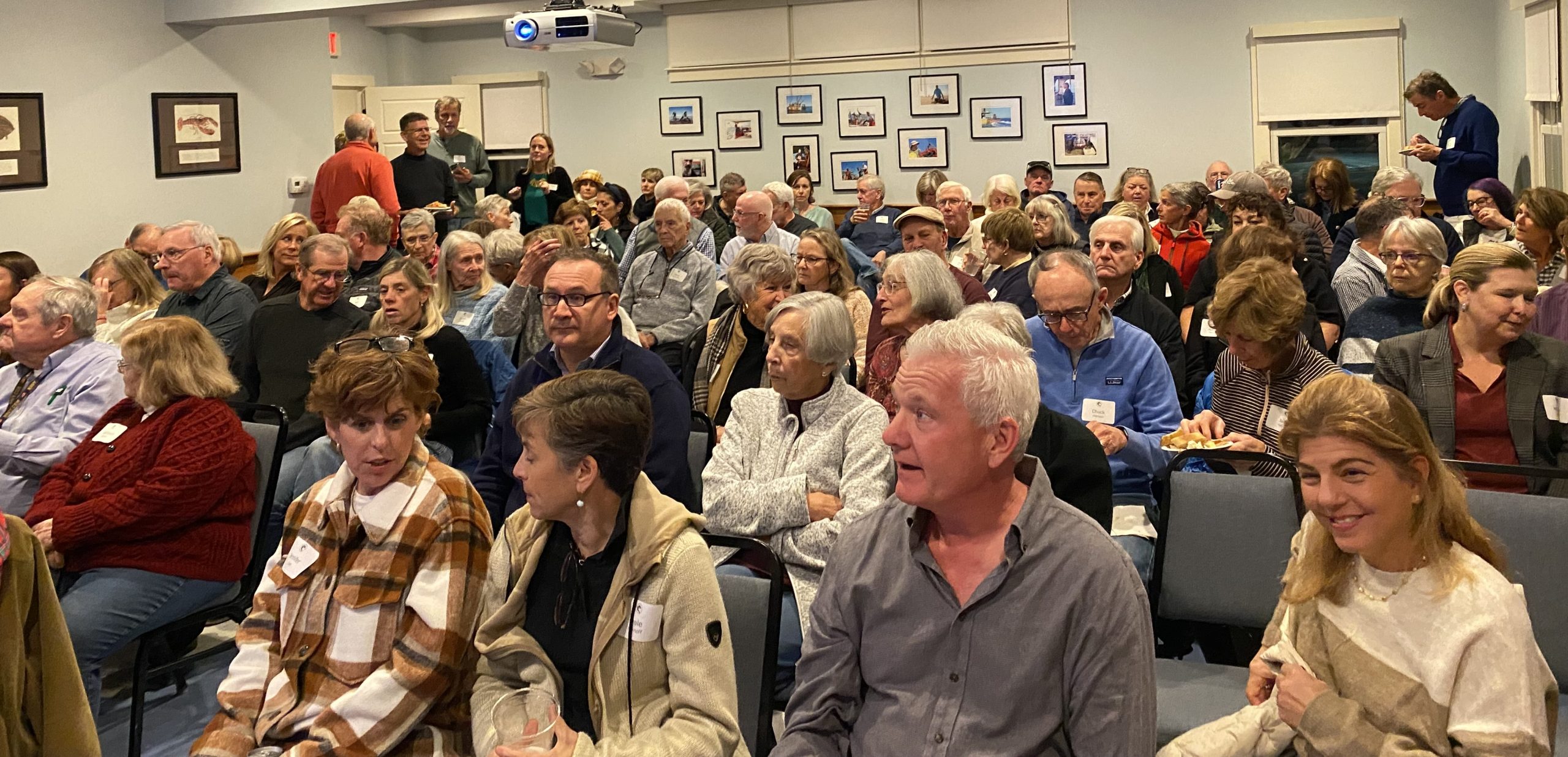
“I want you to remember what you heard tonight about lobster being a sustainable, local fishery and you can feel good about eating it,” said Aubrey Church, policy manager at the Fishermen’s Alliance.
Categories
e-Magazine PDF’s