
By Doreen Leggett
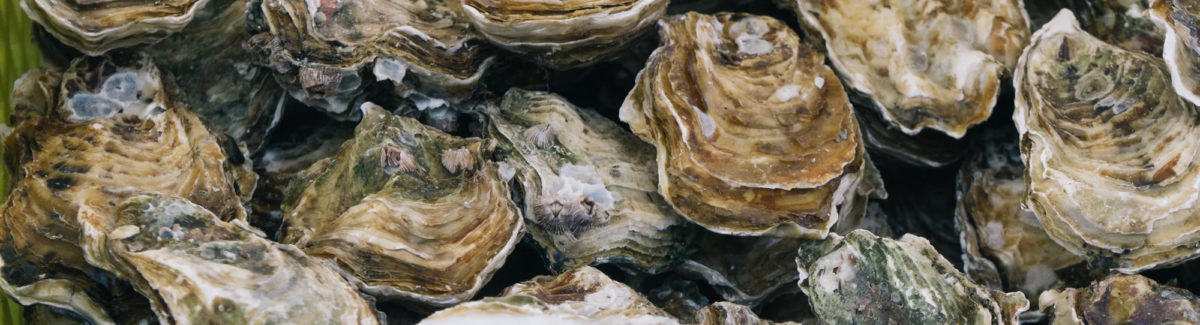
When Samuel de Champlain visited Wellfleet Harbor in 1606, he named the place “Port aux Huitres,” Port of Oysters.
A lot has changed, but the name still rings true.
“Oysters are ingrained into the fabric of our community,” said Nancy Civetta, Wellfleet shellfish constable. “We prioritize that way of life.”
Civetta was talking to a small mid-August crowd at David Hills gallery in Orleans, off Route 28 along Town Cove. Hills’ photographs of commercial vessels and fishermen adorn the walls, plates of oysters and smoked bluefish offered on a back table.
David and his wife Kristen opened the gallery earlier this year and are hosting speakers on the blue economy and other local issues.
Hills’ images hang in homes all over the world, documenting the Cape’s commercial fishing industry.
“David understands this fishing economy and brings it into focus,” Kristen Henley Hill said. “He gives us a beautiful and often simultaneously majestic and gritty view of this world many of us don’t get to see.”
Civetta did much the same, peeling back the curtain on an industry that is part of the Cape’s culture, but a mystery to many.
She celebrated her 8th year as constable on August 17. Her department oversees a $9 million commercial shellfishery, the top income by town in the state, with 300 people involved, about 10 percent of the year-round population.
“It is the number one year-round industry for the town,” she said, adding Wellfleet is also the only Cape town with a year-round recreational fishery. “Advocacy for our fishermen is required.”
One reason the town can provide additional support is because Massachusetts is a home-rule state. That means Wellfleet has flexibility in shellfishing regs and those rules are designed to foster harvesting. One example, said Civetta, is they allow vehicles on tideland so grant holders can more easily tote heavy gear, as well as quahogs and oysters.
Civetta said Wellfleet was the first aquaculture town, where individuals lease (or are granted) tidal and subtidal areas (up to seven acres) to grow shellfish. There are around 120 farms in town, more than double any other town in the state.
She told the group that the abundance of grants means an abundance of paperwork; each grant holder must file a report every year. They also all require licenses and yearly inspections as well as renewal applications that require board of selectmen approval.
Along with a healthy aquaculture industry, Wellfleet is one of few towns that has a healthy wild shellfishery as well. Civetta said no one exactly knows why Wellfleet is blessed when other towns have lost their wild fishery. There are theories: One is that Great Island protects the harbor from the power of Cape Cod Bay. Another is that southwest winds keep spat, baby shellfish, from being carried out to sea.
Along with those who rake for shellfish, there are draggers who dredge up quahogs, blood clams and other shellfish.
The harbormaster’s department works to strengthen the shellfish population. They grow and put out shellfish (60,000 in just the next few days after her talk), lay out culch (empty shells) where shellfish can attach and grow, remove invasive predators such as green crabs, and catch wild spawn on devices known as Chinese Hats.
The conical hats are coated in concrete, sand and lime, then placed in the water. Larvae attach, develop into spat and then adult oysters.
The department puts out the hats, and allows grant holders to do so as well.
“It’s free seed although very labor intensive,” Civetta said.
This year the town put the devices out in mid-June, earlier than usual, and were glad because they collected a lot of spat. Farmers who put theirs in even a week later didn’t do as well.
With warming waters, shellfishermen are trying to figure out how to get the best harvest with a shifting ecosystem.
The commercial fishery for wild shellfish grows by three times in winter, when aquaculture slows down. The attraction, Civetta said, is that it is a way to make money without a lot of overhead.
Like other towns, Wellfleet regularly invests in its shellfishery. Barnstable County groups towns to get best bids for bulk seed, most recently from Merrymeeting Shellfish Company in Maine. Wellfleet also spent $100,000 in local seed from ARC, in Dennis.
This year, with help from Jesse Rose who grew up in town and harvests and processes sea clams, the town upped its culch capabilities considerably.
They used to put eight truckloads of shell into the harbor; this year it was closer to 30. Shellfish department staff lay out shells in lines on the bottom, providing substrate for oyster larvae to attach and grow.
To see which areas are most effective for spat success, the town started an experiment with the county to measure them over a three-year period.
They are also working with the county and Roger Williams University to breed clams that resist neoplasia — a disease that kills quahogs but can’t spread to humans.
Another partnership with the county involves one of the biggest salt marsh restoration projects in the nation, Herring River, replacing a dike with a bridge to create natural salt water flow back into the estuary. Civetta said shellfishermen are understandably nervous about potential negative changes when the area is opened. The department is conducting quarterly assessments to establish a baseline and see if there are changes.
Civetta also tries to make sure that when property is sold, new owners understand the value and importance of shellfishing. She champions landings and ways to the sea and keeps her eye out for attempts to block traditional access to water.
“I just can’t let that happen,” she said.