
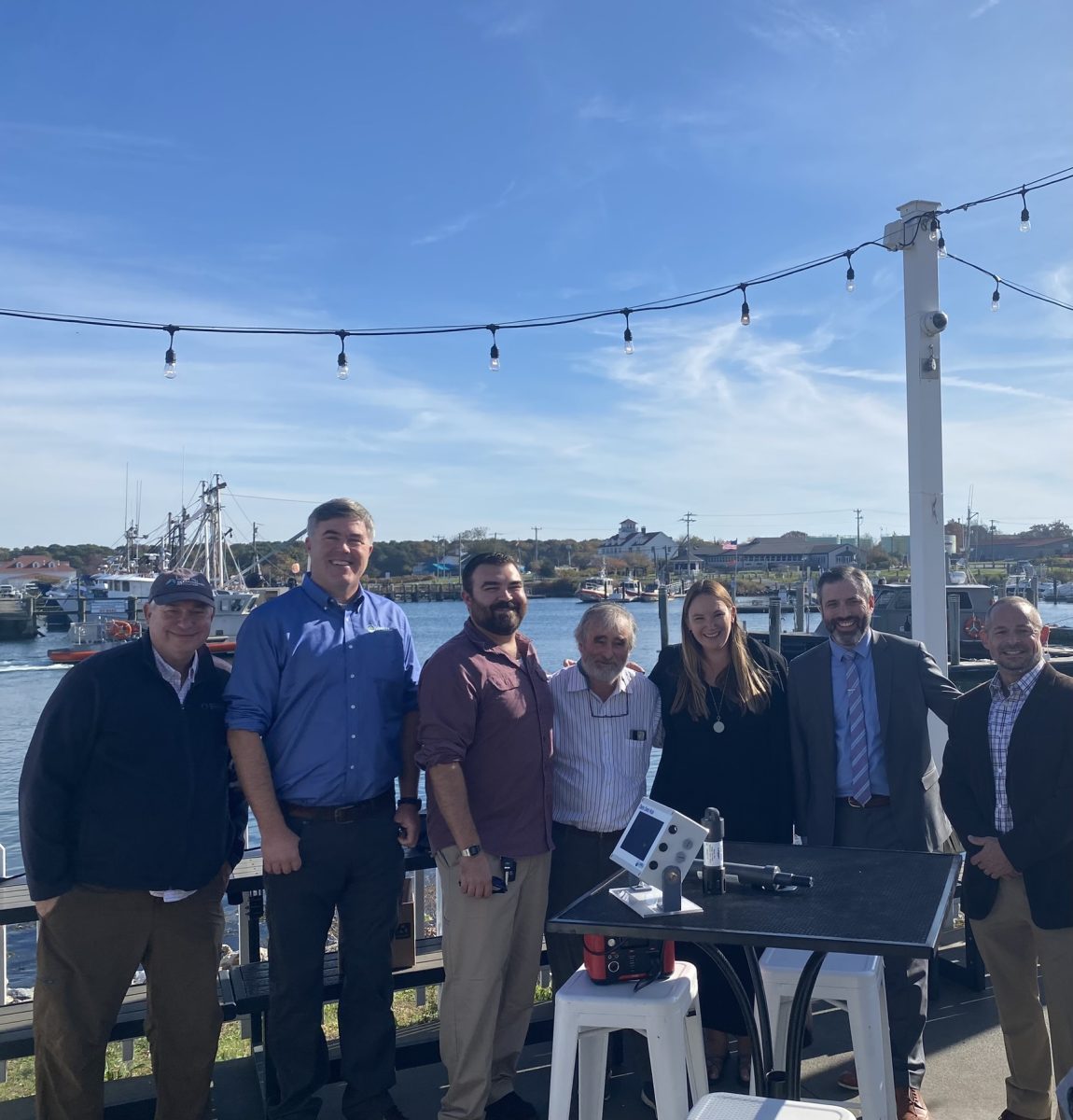
The eMOLT program has grown since its start in the late 1990s, supporters and partners were on hand at Fishermen’s View on Oct. 31 to celebrate a grant from Massachusetts Technology Collaborative. Glen Gawarkiewicz, a physical oceanographer at Woods Hole Oceanographic Institution, Nick Lowell, of Lowell Instruments, George Maynard, NOAA, Jim Manning, father of the program, Aubrey Church, policy director at Fishermen’s Alliance, Nick Rotker,, Mitre Corporation’s Chief Bluetech strategist and James Byrnes, MTC’s innovation institute.
By Doreen Leggett
Since the eMOLT program began close to 30 years ago, it has captured six million hourly records of temperature, with tens of thousands of records of salinity and velocity of currents.
Those records paint a pointillist picture of a rapidly changing ocean, giving researchers information to help predict everything from weather to harmful algal blooms.
The immense amount of information exists thanks to commercial fishermen who have gathered it, spearheaded by now-retired researcher Jim Manning who believed that fishermen could be pivotal in research, as well as benefitting from it.
George Maynard, at NOAA’s Northeast Fisheries Science Center, has taken over and now Manning’s “passion project” — mailing temperature loggers to lobstermen, receiving latitudes, longitudes and depth — has grown exponentially.
There are now close to a dozen institutional partners involved, including the Fishermen’s Alliance. A handful of fishermen volunteers has swelled to close to 200. Check out this photo gallery, a look back in time (with some familiar faces) as well as a glimpse of the future.
(Archive photos courtesy of George Maynard)
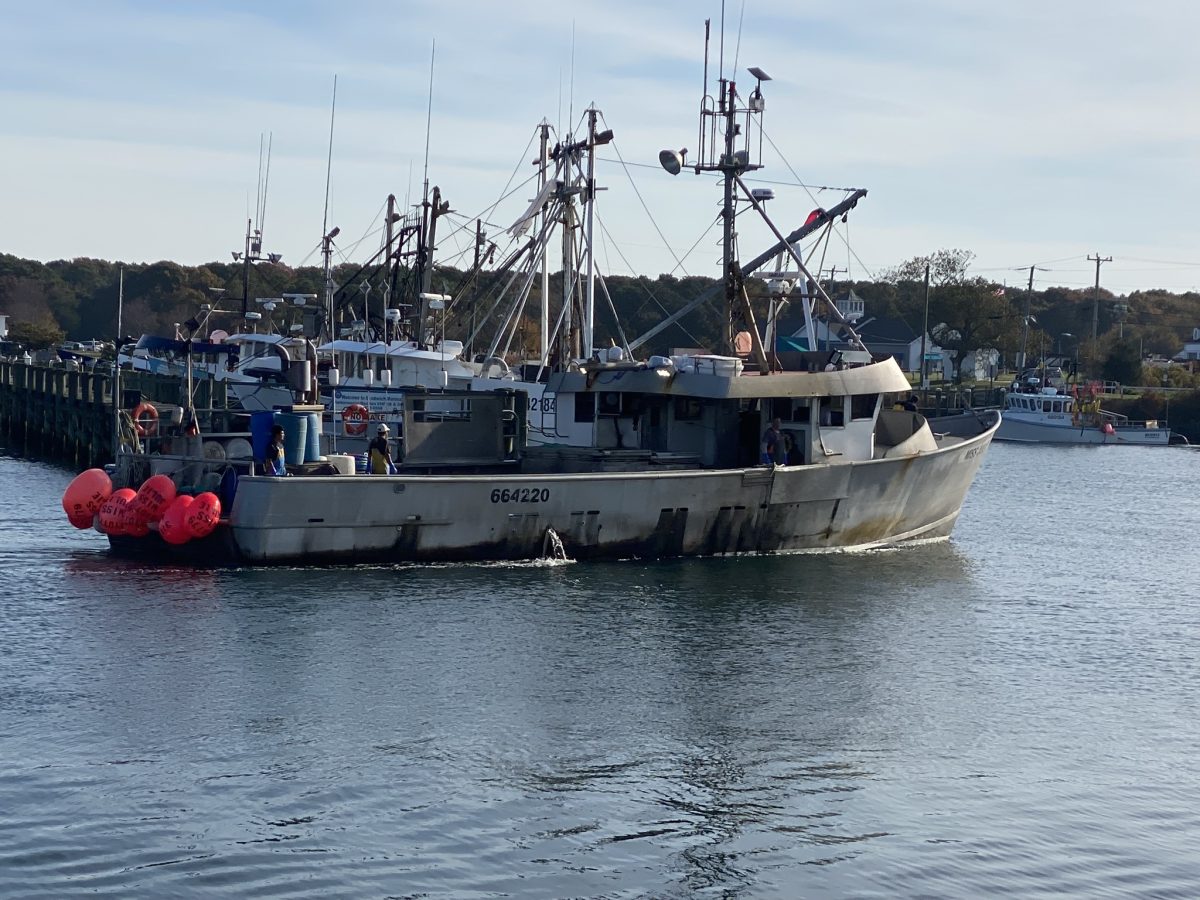
F/V Miss Juile was one of the first boats involved in the eMOLT program. The owners, Bob and Denny Colbert, also own Fishermen’s View a restaurant and fish market in Sandwich that sells local catch.
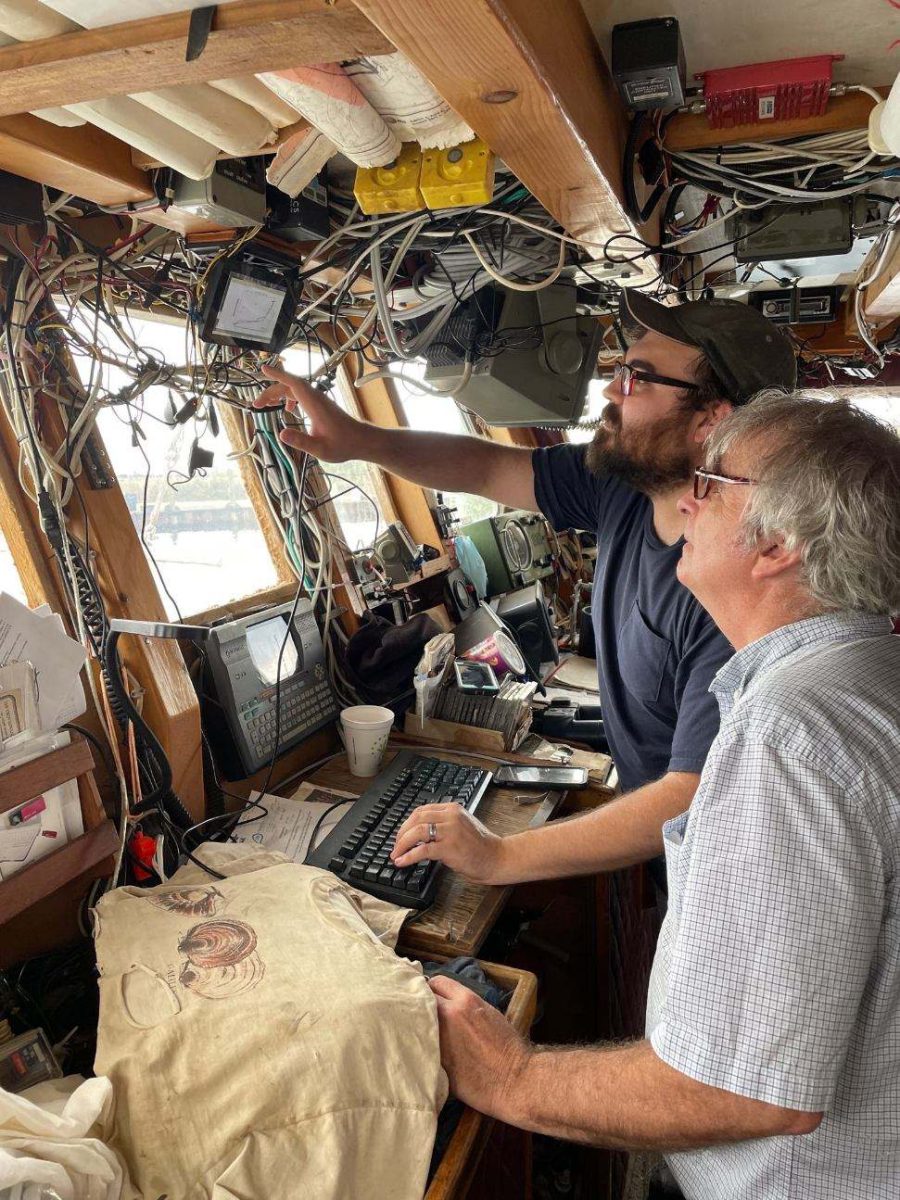
Jim Manning, foreground, started the eMolt program . It is now run by George Maynard of NOAA Fisheries.
Eric Hesse, longlines for haddock and other groundfish as well as harpoons tuna. He uses information collected by eMOLT to improve his business.

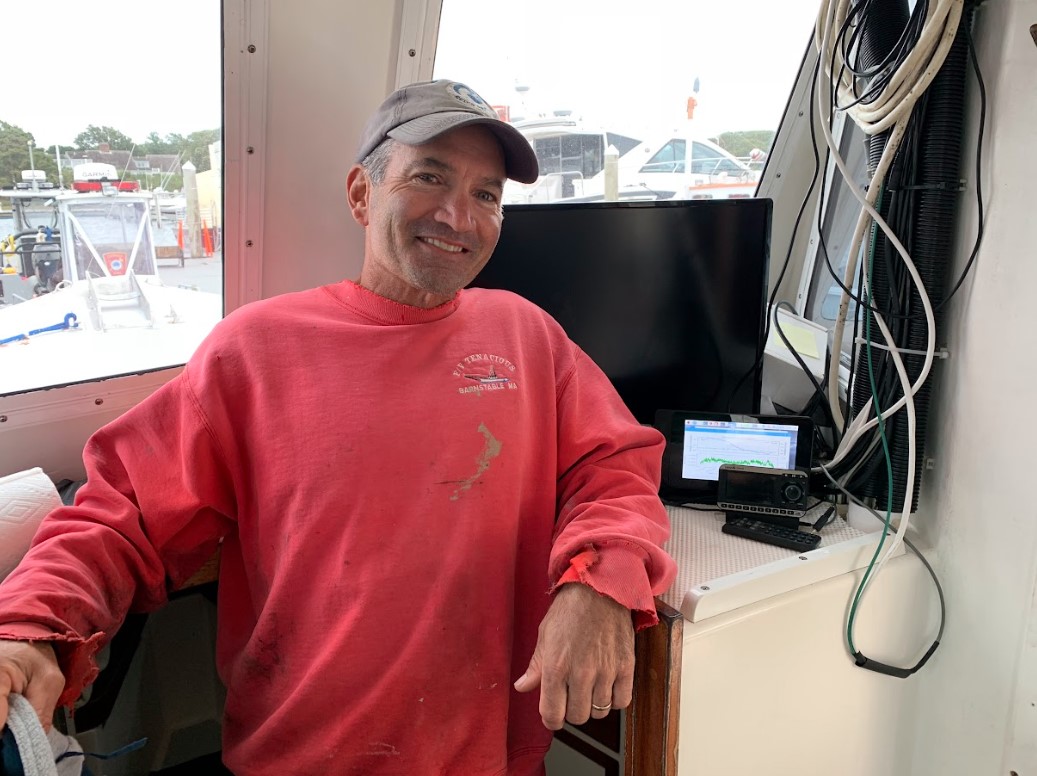
Captain Bob Dutra on F/V Rolex. The data hub behind him displays temperature. Temperature plays a big role in fishing, some fishermen report that once the bottom temperature on the northern edge of Georges Bank gets to a certain degree it is worthwhile going. So having bottom temperature in real time is invaluable.

The original eMOLT sensors were put on lobster traps like those owned by Captain Rob Martin, but the program has since expanded to include draggers and other gear.
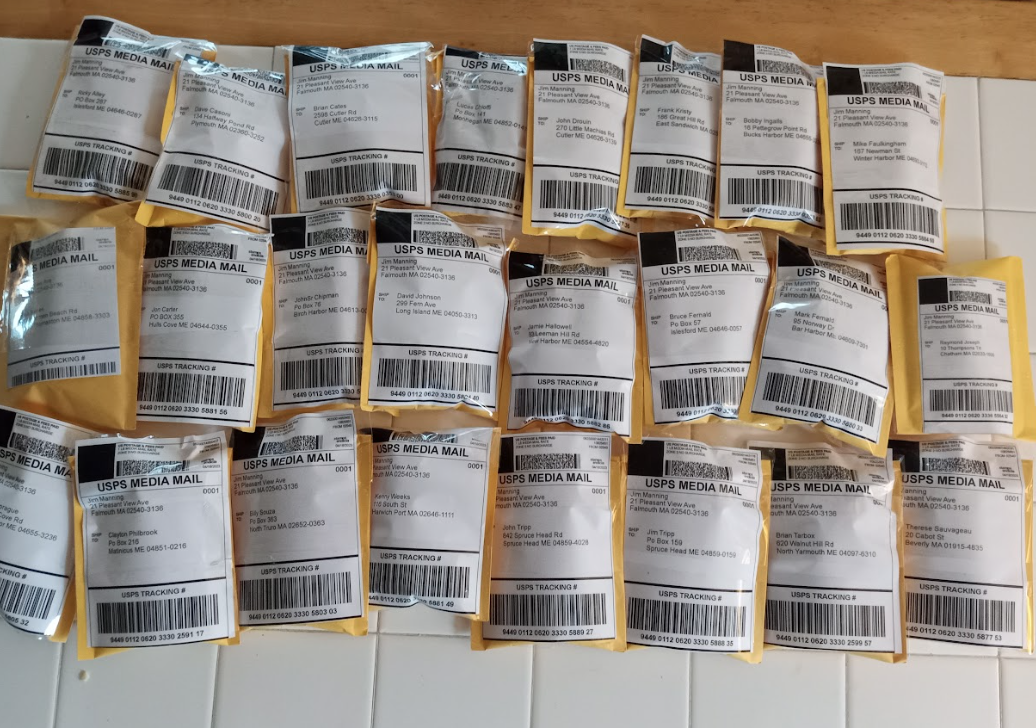
A batch of sensors at Jim Manning’s house ready to be mailed out to lobstermen.

Jim Manning using a water-filled pipe to test depth sensors at his home office in Falmouth.

Manning, Huanxin Xu, a software engineer for Gulf of Maine Lobster Foundation, and Nick Lowell with a prototype deck box in the early days.
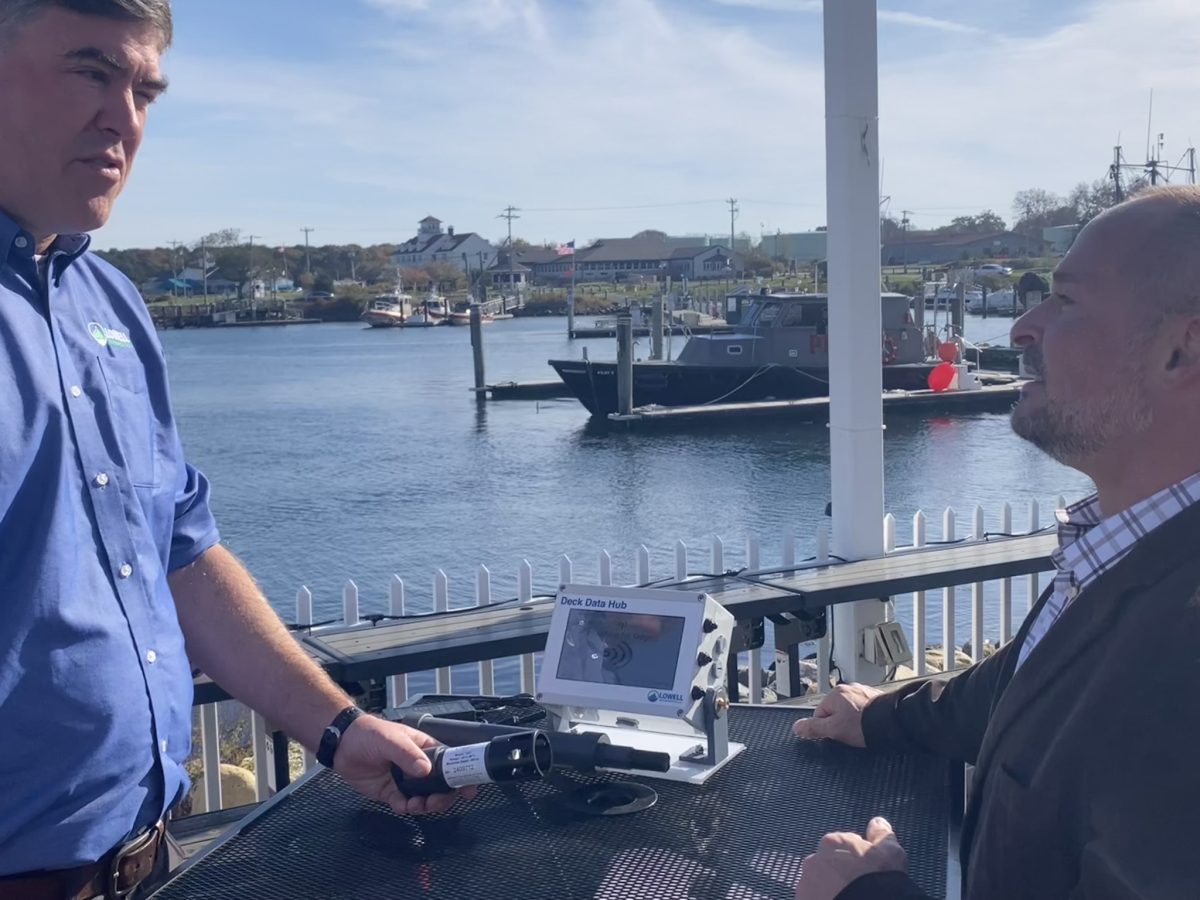
Lowell, eMOLT’S technology development partner, and James Byrnes , Director of Operations & Programs at the Innovation Institute, a division of the Massachusetts Technology Collaborative, talk about the project on Oct 31.

An early version of the sensor (which is grey) on the dredge of the F/V Tom Slaughter in Hyannis.
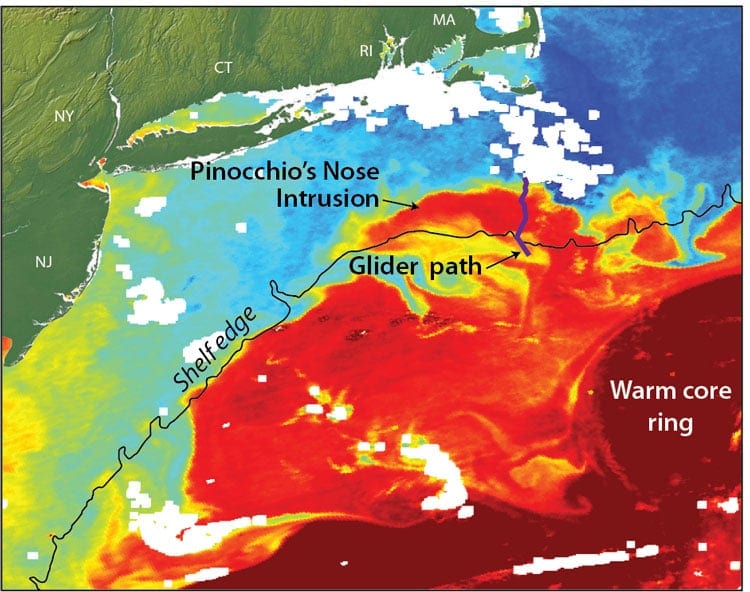
Those who attended our Small Boats, Big Science talks may recognize an image from the Woods Hole Oceanographic Institution that shows warm core rings and how they push warm water (the nose intrusion) toward shore.