
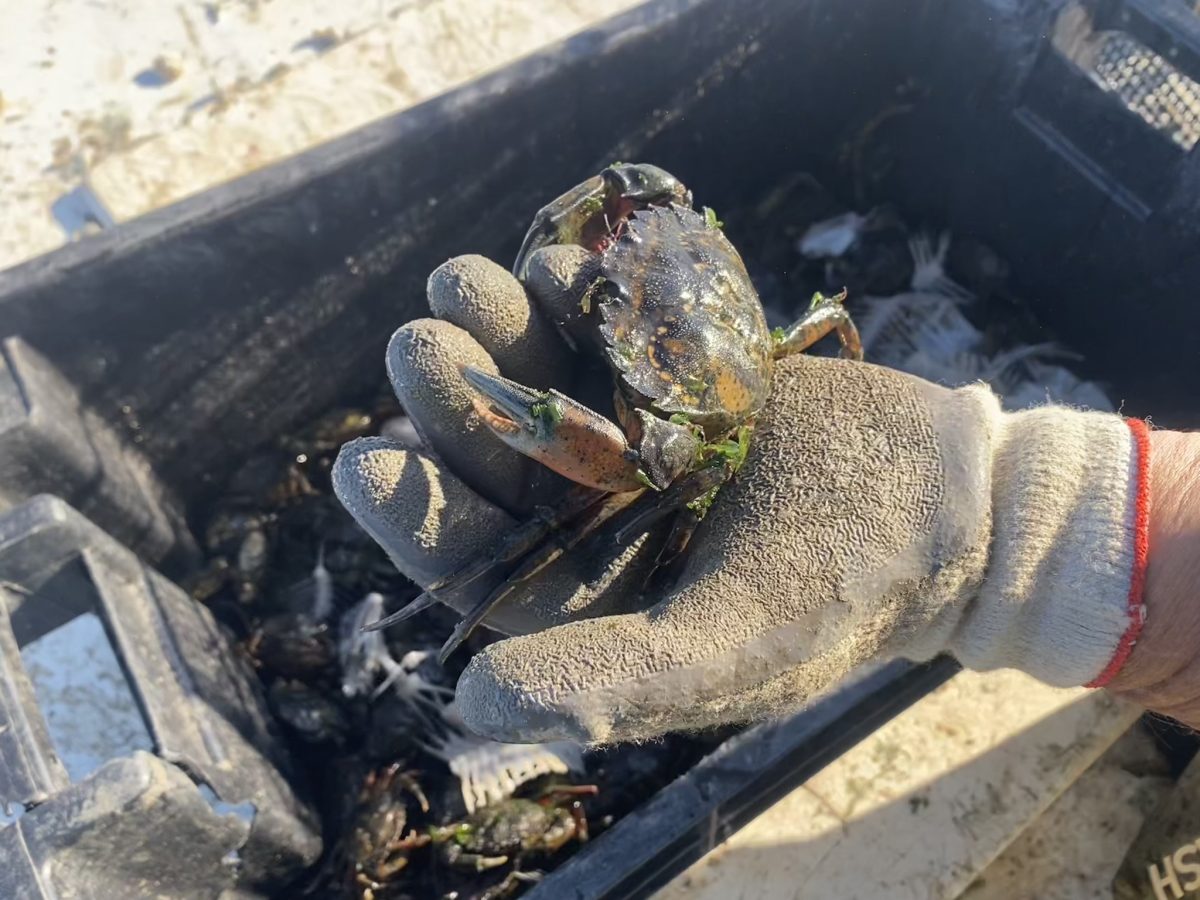
Green crabs arrived on the East Coast from Europe in the 19th century. Their populations have exploded, to the detriment of native shellfish.
By Doreen Leggett
Green crab is considered one of the most pernicious invasive species in the world and has proved destructive to the Cape’s marine ecosystem.
To fight back against the European invader which makes short work of clams, scallops and young lobsters as well as destroys eelgrass, people have tried a variety of measures.
Some towns, such as Ipswich, have put a bounty on their heads, others harvest them for bait and many have tried to create a market for them. Greencrab.org was founded in 2020 to raise awareness and to take green crab from “problem to plate.”
This gallery shows green crabs being harvested on Cape as well as showcases a variety of green crab menu items.
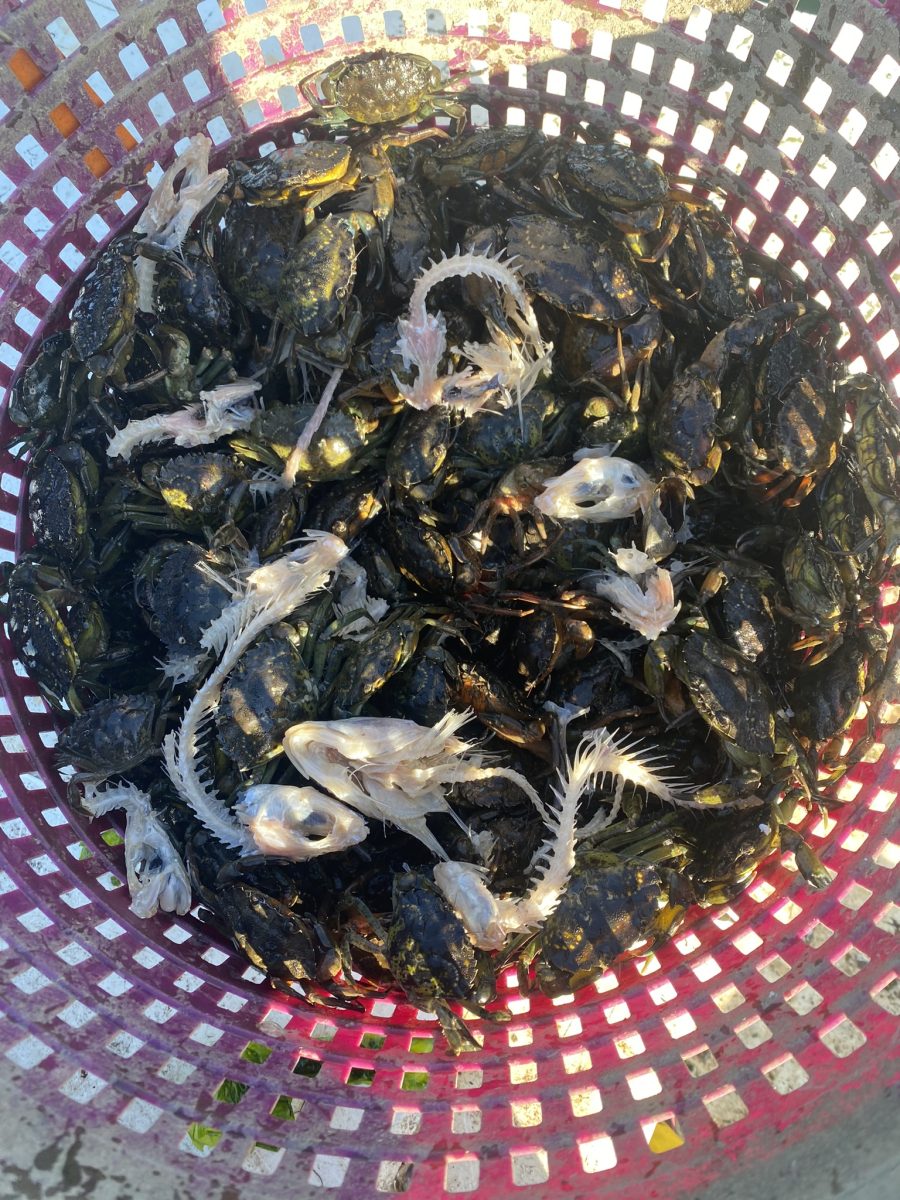
When Wellfleet Assistant Shellfish Constable Johnny “Clam” Mankevetch harvests green crabs, his traps are filled with crabs and vestiges of bait.
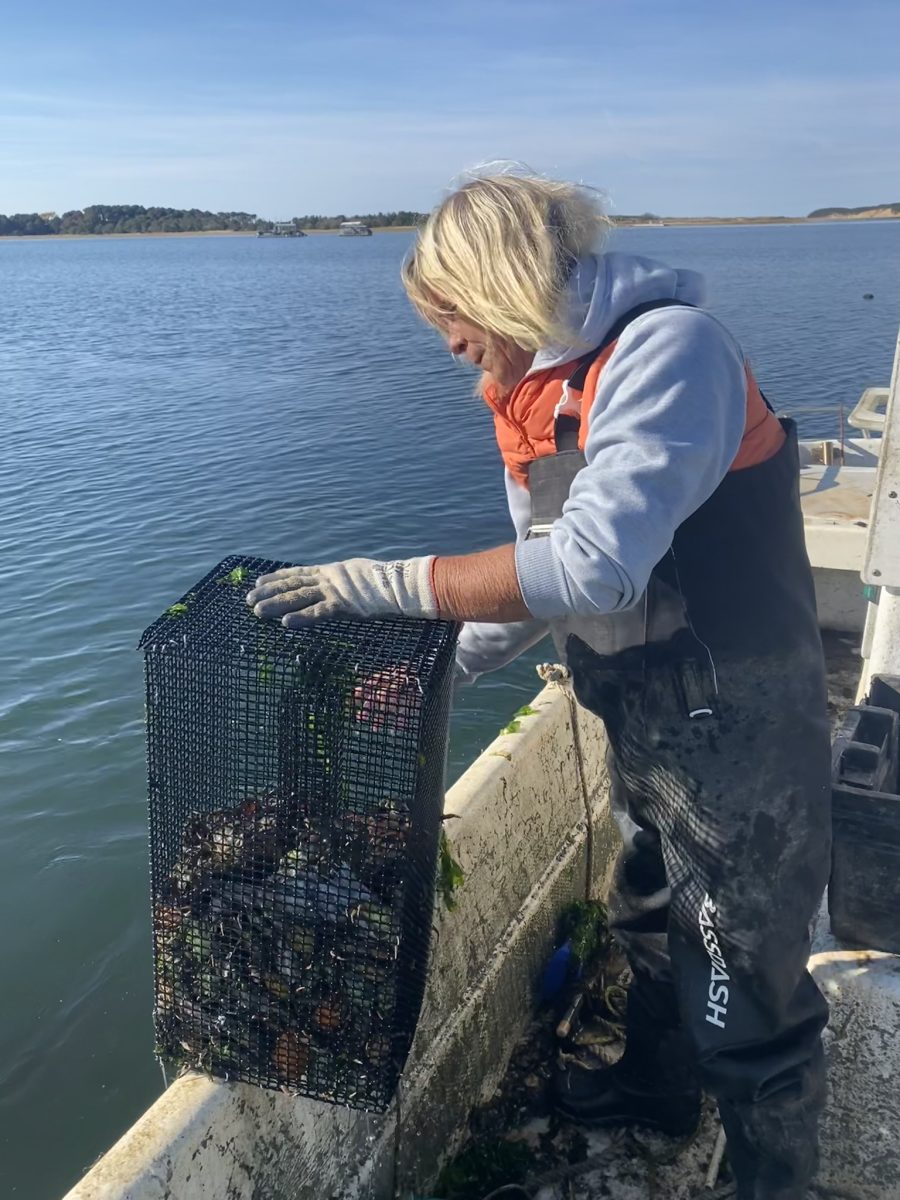
Mankevetch uses refurbished eel traps to catch green crabs and caught 8,000 – more than he expected – in a few months.
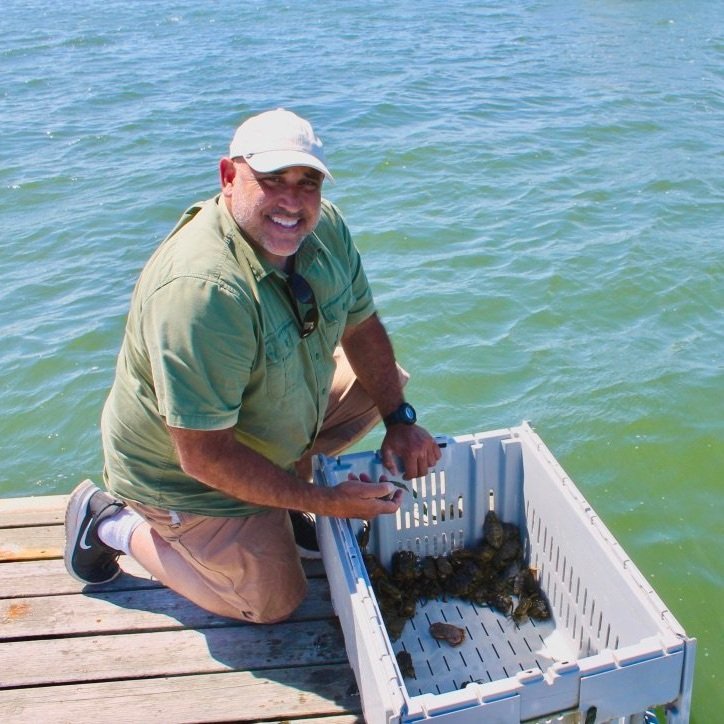
Jamie Bassett, of Chatham, was one of the first on the Cape to try and develop markets for the invasive predator.

In Venice, Italy, the artisanal ‘Moeche,”, soft shell green crabs are very valuable and popular. Bassett visited Venice to learn more about how best to pursue a green crab fishery in New England. Photo courtesy of Mary Parks of greencrab.org.

A dirty green crab martini. Find the recipe at.GreenCrab.org. The nonprofit has a two-clawed approach: build culinary markets for European green crab and spread awareness of its invasive impact. They partner with crabbers, wholesalers, seafood industry stakeholders, and community members to get green crabs out of the water and onto plates. On their website, you can find free recipes and information on where to buy and eat green crabs. Photo courtesy of GreenCrab.org
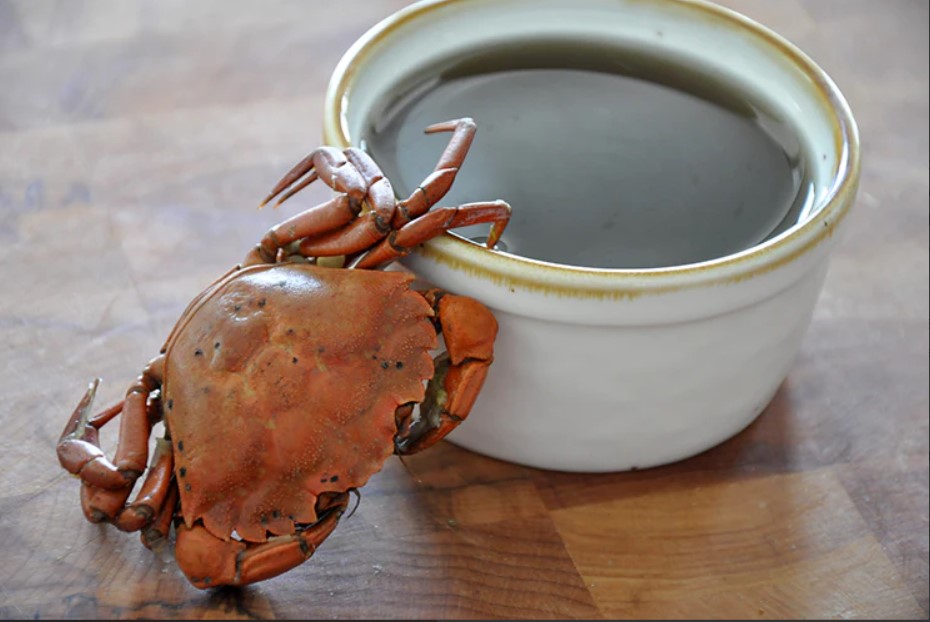
If you don’t have time to harvest green crabs yourself, Wulf’s Fish has them available for order, frozen in two-pound bags. Photo courtesy of Wulf’s Fish.
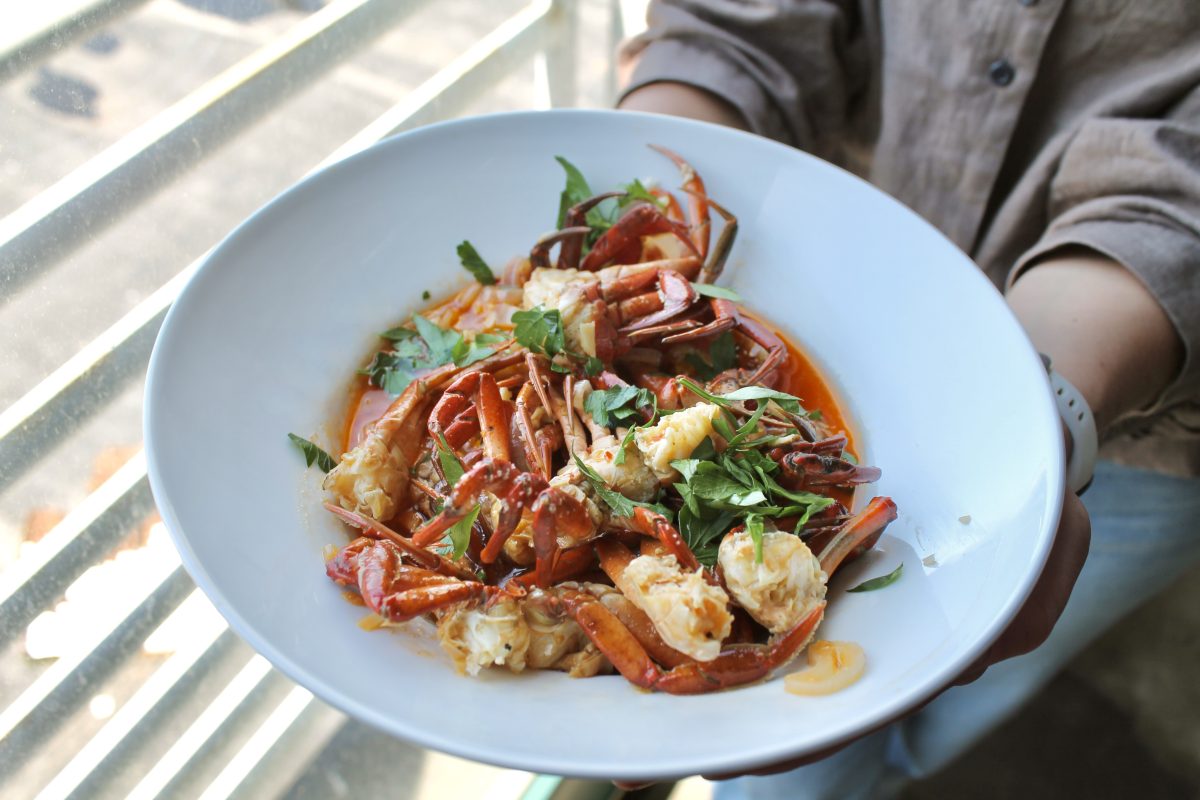
For green crab scampi chefs use a “lollipop” of meat attached to four crab legs which makes the perfect replacement for shrimp in any dish that uses tail-on shrimp. Photo courtesy of Mary Parks.
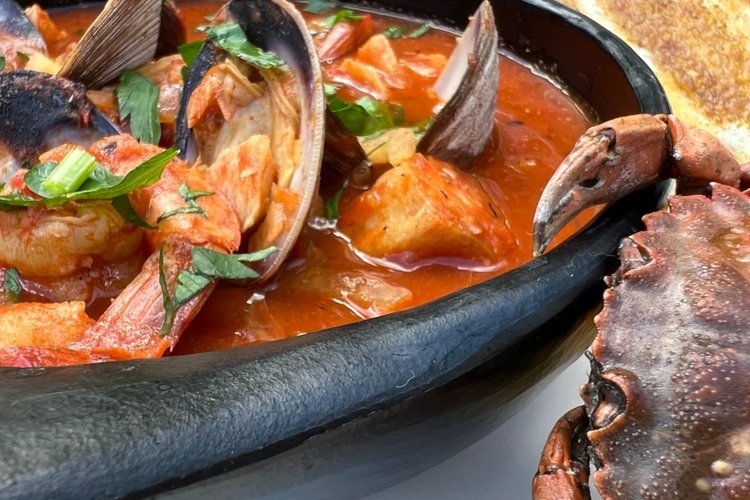
Chefs rave about green crab stock, which can be used as a base for soups, bisques, noodle dishes, risotto, or frozen in ice cube trays to keep on hand to add flavor to pasta sauces, sautés and more. Photo courtesy of Mary Parks.
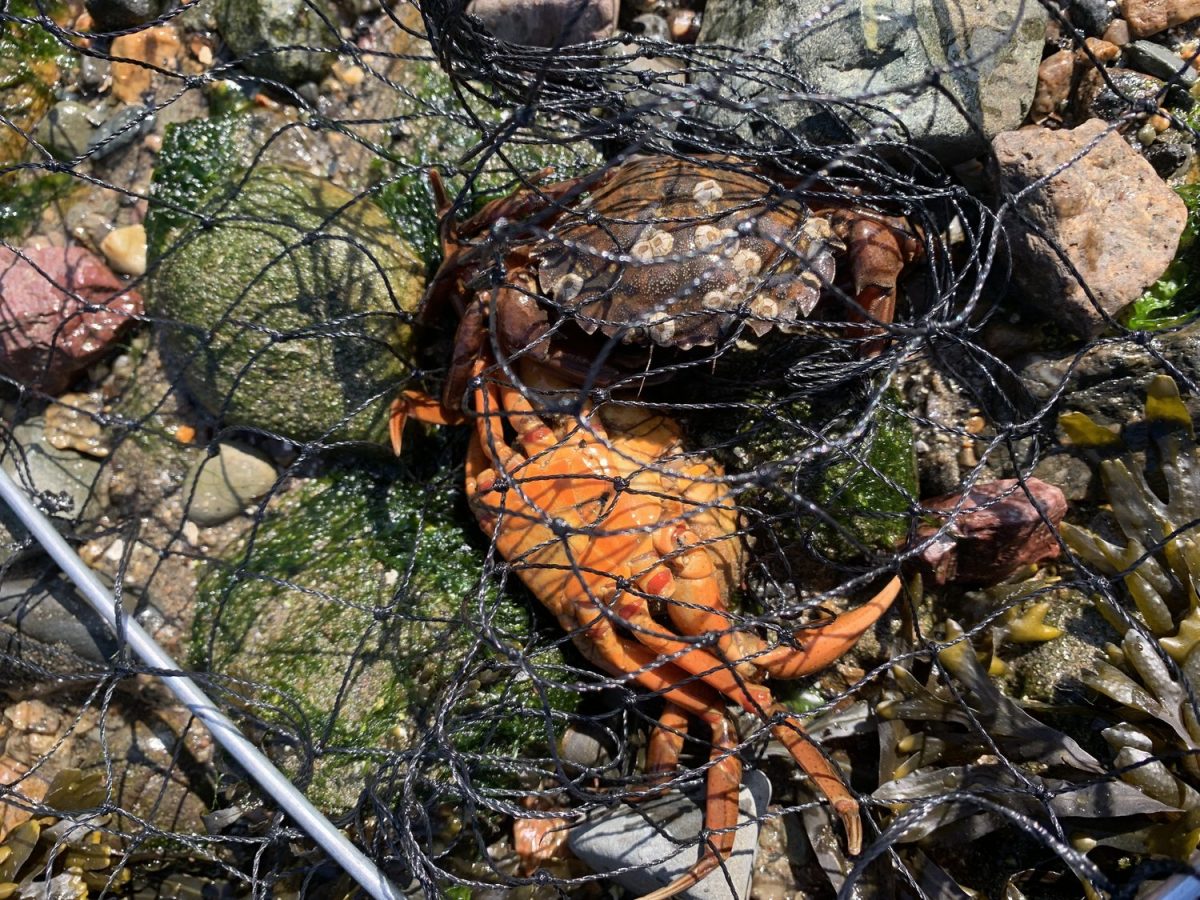
Green crabs are easy to trap. Greencrab.org has a step by step guide. If you live on the Cape you need a letter of authorization from Division of Marine Fisheries.
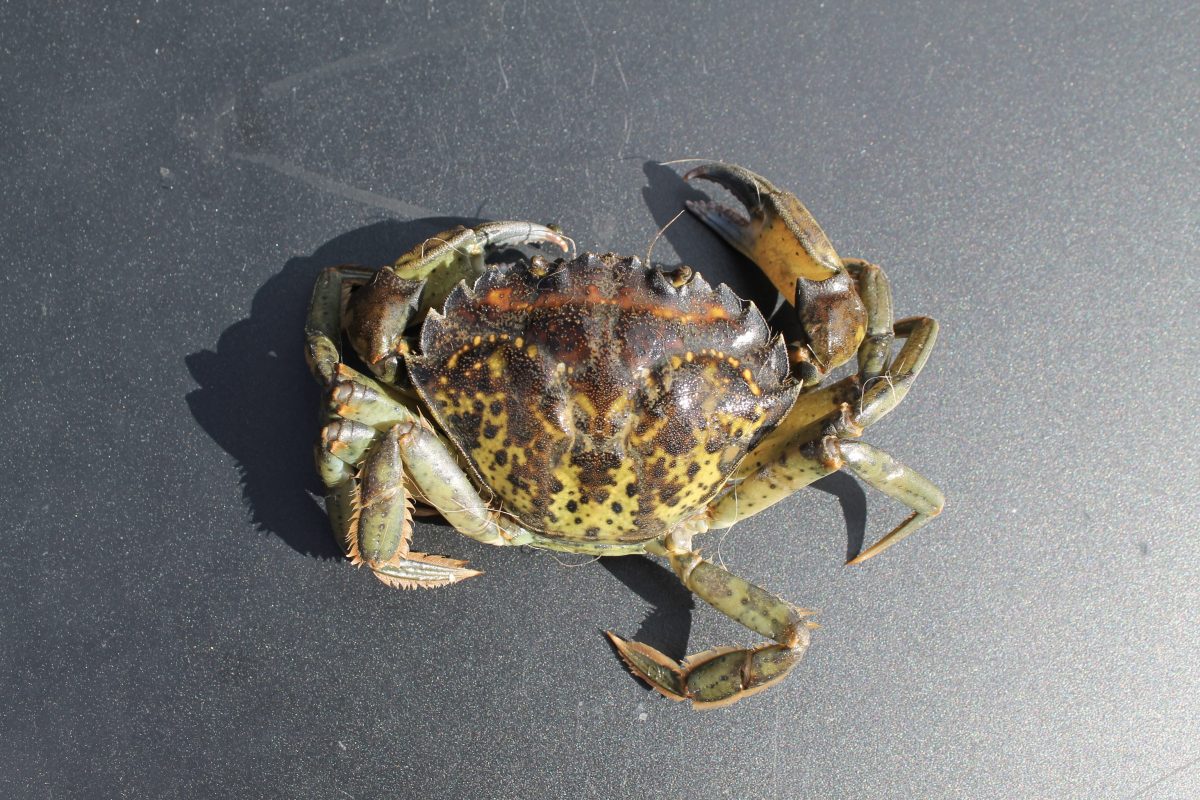
One of the ways to identify a green crab is by the five triangular spines on each side of its shell, behind its eyes. Photo courtesy of greencrab.org